Skip to content

About

Institute · AdvisoryAn institute that measures, and a practice that acts on what it finds.

Two arms, one foundation.

The Cognitive Coefficient Institute publishes the Cognitive Coefficient Index: measurements of countries, cities, institutions and people by their cognitive capacity, human and machine, together with the research drawn from them.

Cognitive Coefficient Advisory works privately with governments, boards, investors and principals. Every engagement begins from the Index, so the advice rests on the same measurements the Index publishes.

How the Index is built

Each ranking reads two lenses. Absolute power (CPI for countries, MPI for metros, SPI for states) weighs the mass of capacity an entity commands: AI capital mobilised, compute, frontier models, robotics and automation, and research output, log-normalised so one outlier cannot swamp the scale. The Coefficient (CC, MCC, SCC) reads the same capacity per person, in the manner of the Human Development Index, so depth can be compared across very different sizes.

Indicators are sourced and refreshed nightly. Where a value is missing it is estimated and marked as an estimate. Every nightly ranking is snapshotted, so movement can be followed over time; history before the live snapshots is a modelled backcast, shown as such.

Countries

Economies, ranked on the total cognitive capacity they command and on that capacity per person.

Open the table →
Major cities

The world's major metros, on the absolute AI capacity concentrated in them and on that capacity per person.

Open the table →
US States

The states and the District of Columbia, on absolute AI capacity and on capacity per person.

Open the table →
Largest companies

The largest public companies by market value, scored on corporate power and on AI posture.

Open the table →
AI companies

The companies with the most influence over how AI is built and deployed.

Open the table →
Open models

Every open-weights model released in the last two years that Epoch AI has measured: the capability anyone can download and run.

Open the table →
Data-centre operators

The developers and operators that build and lease the capacity AI runs in.

Open the table →
Power and energy for AI

The utilities, generators and on-site power providers signed to supply data centres.

Open the table →
Telecom and network carriers

The fibre backbones, subsea cables and carriers that connect the sites.

Open the table →
Servers, networking and optics

The makers of AI servers, data-centre switches, optical links and storage.

Open the table →
Power, cooling and electrical equipment

The switchgear, transformers and cooling a data centre needs, and the contractors who fit them.

Open the table →
Critical minerals and materials

The miners and materials makers that chips and power depend on.

Open the table →
Training data and labelling

The companies that produce, label and license the data models are trained on.

Open the table →

People

The Institute is led by its founders and run by researchers in mathematics, AI, cloud and data engineering, who build and maintain the Index.

Leadership

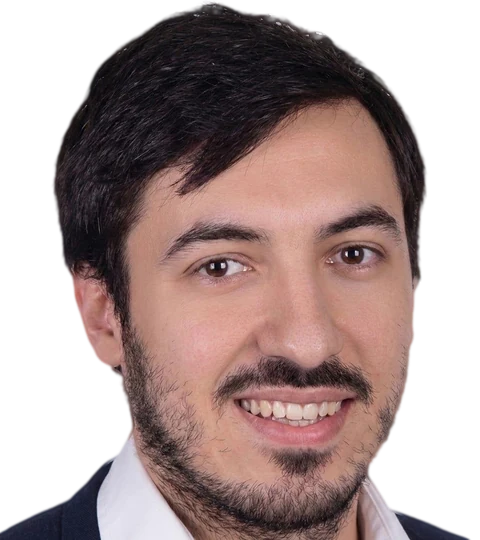
Ari Smith

Ari Smith

Founder and Chief Executive Officer

Ari Smith founded Cognitive Coefficient and leads the Institute and its advisory practice. He has spent more than two decades building and directing technical teams in applied artificial intelligence, and at Cognitive Coefficient he leads the mathematicians, data scientists and engineers who design the Index's methods and the systems that compute it.

From 2016 to 2019 he was Visiting Professor of Artificial Intelligence and Advanced Research at Yonsei University in Seoul, where, with Dennis Lee, he designed and taught the university's first course in AI entrepreneurship: students learned the foundations of the field, then built proofs of concept that were assessed by panels from Samsung, LG and Amazon.

Earlier, he was a Solutions Architect at Microsoft, leading the technical team on Verizon, then Microsoft's largest global account, including a $117.3 million programme; Senior Vice President of Technology at MR Financial and interim Chief Information Officer of AVL, the automotive engineering group, where he led its global eSpares procurement platform; and co-founder and Chief Technology Officer of AlertWire, an MIT start-up acquired by Wireless Knowledge, a Microsoft and Qualcomm venture. He is a named inventor on multiple patents. He studied computer science at MIT and molecular genetics at the University of Washington.


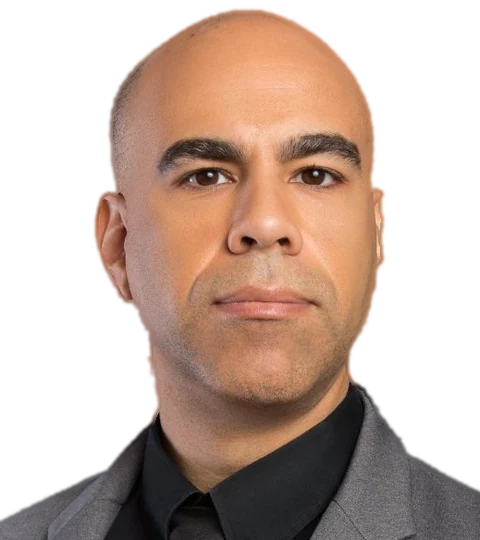
Dr. Dennis Lee

Dr. Dennis Lee

Co-founder and President

Dr. Dennis Lee co-founded Cognitive Coefficient and is its President. A specialist in linguistics and deep machine learning, he has built and managed international technology teams across three continents for nearly two decades. At Cognitive Coefficient he designed the merit-based programme through which the Institute recruits and trains its researchers, pairing each candidate with a senior researcher on live work for three months.

He was Assistant Professor of AI and Quantitative Analysis at Yonsei University, where he created the first AI curriculum at Underwood International College, and a Postdoctoral Fellow and Lecturer at Harvard University, applying machine learning, natural-language processing and spatial analysis to historical and cultural data. Earlier, he advised corporations and government agencies across Asia and Europe on cross-border technology ventures, and co-founded AlertWire, serving as its Chief Executive through its acquisition by Wireless Knowledge.

He holds a PhD and an MA from the University of California, Los Angeles, and an AB from Washington University in St. Louis. He works in English, Korean, Chinese, Japanese and Spanish, and reads Classical Chinese.

Research directors

Dr. Antonij Mijoski

Dr. Antonij Mijoski

Director of Mathematical Intelligence

Dr. Antonij Mijoski leads the Institute's mathematical research, including the probabilistic and statistical foundations of the Index and its quantitative models. He holds a PhD in probability theory from the University of Strasbourg (IRMA), held under a CNRS doctoral scholarship, a research master's there completed first in his year, summa cum laude, and a BSc in applied mathematics and informatics from Saint Petersburg State University.

His research on the architecture of transformer models includes “Key and Value Weights Are Probably All You Need” (with M. Karbevski; ICLR 2026 DeLTa workshop) and “Can an MLP Absorb Its Own Skip Connection?” (2026). He lectures in mathematics at University American College, Skopje, and as a student took first place at the International Olympiad in Topology and competed at the International Mathematical Olympiad.

Dr. Jovan Krajevski

Dr. Jovan Krajevski

Director of AI

Dr. Jovan Krajevski directs the Institute's AI research, with a focus on the architecture and efficiency of large language models. His doctoral work in informatics at Ss. Cyril and Methodius University developed methods for pruning language models using Bayesian posterior variance, and he has applied topological data analysis to preserving the integrity of neural networks as they are compressed. He also holds an MSc in statistics for data analytics and a BSc in computer science.

His papers include “Going NUTS with ADVI: Bayesian inference techniques” (2025) and work on validity-preserving algorithms for multivariate quadratic quasigroups. He received three honourable mentions at the International Olympiad in Informatics and placed first nationally in IEEEXtreme.

Dale Michalk

Dale Michalk

Director of Infrastructure

Dale Michalk directs the cloud and data architecture on which the Index is computed and published: secure, governed platforms for sensitive research data, large-scale analytics, and the hosting of language models and retrieval systems. He was previously an Azure specialist and developer evangelist at Microsoft and a solutions architect at Databricks, with deep experience of Snowflake and BigQuery. A graduate of the United States Military Academy at West Point, he served as an officer in the U.S. Army.

Haris Mandal

Haris Mandal

Director of Research & Development

Haris Mandal leads data engineering at the Institute: the pipelines that gather, validate and model the indicators behind the Index. His work spans time-series forecasting, graph and network analysis, natural-language processing and distributed systems. He was previously a data scientist and engineer at Netcetera and a software engineering intern at Facebook in London, and is a co-author of “Multilayer Link Prediction in Online Social Networks” (IEEE TELFOR, 2018). He holds an MSc in statistics for data analytics and a BSc in computer science, and has taken first place nationally in both the ACM programming contest and IEEEXtreme.

Principles

Measure first

Advice starts from where an entity stands on the Index, on the same scale as everyone it is compared with.

Show the working

The method is published, the indicators are sourced, and modelled estimates are marked as estimates.

State the uncertainty

The Index, its outlooks and its scenarios are model outputs, not predictions, and say how wide their error is.

Discretion by default

Clients are never named. Work for one client is never published or attributed.

Begin with where you stand

Tell us who you are and what you are weighing. A partner reviews every request personally.